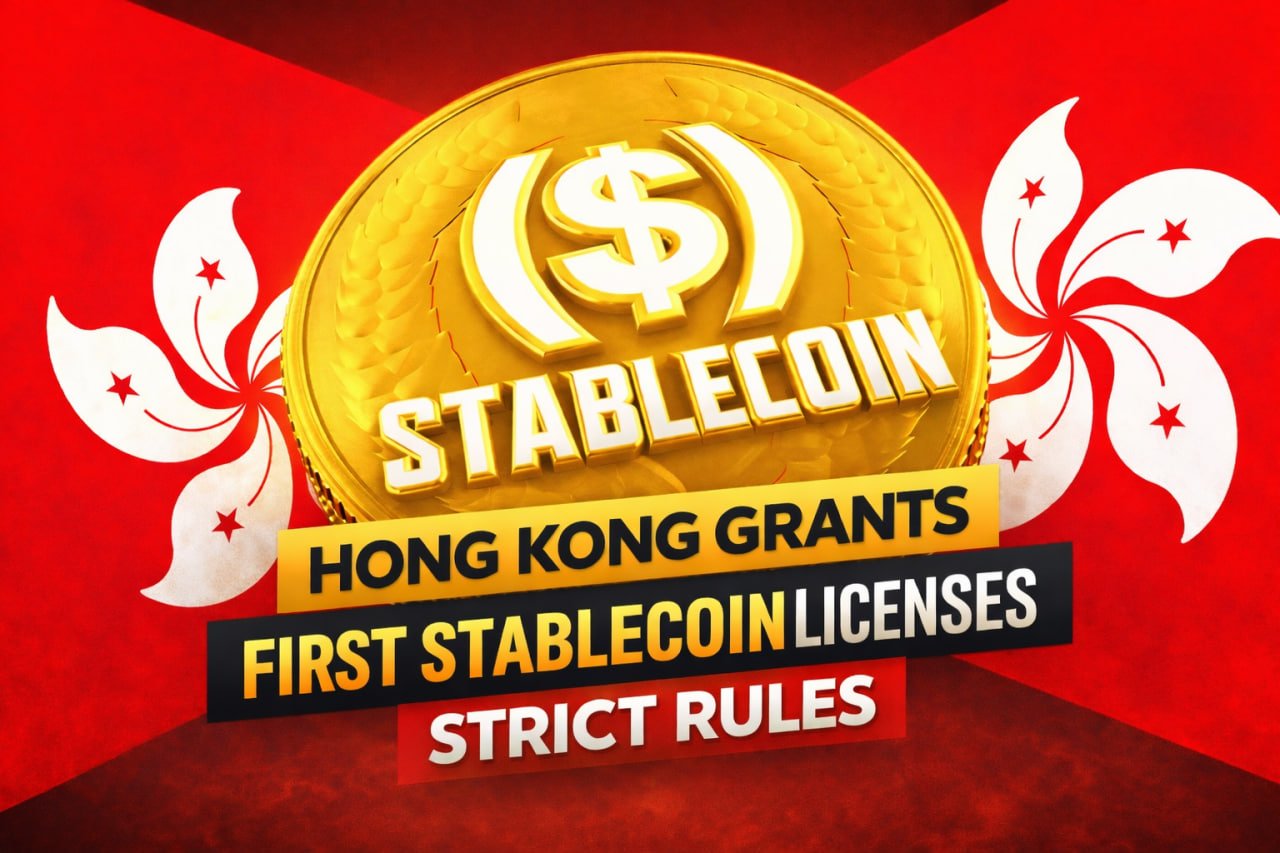
The first two stablecoin issuer licenses were issued by Hong Kong on Friday to HSBC and Anchorpoint Financial, a joint venture led by Standard Chartered that includes Animoca Brands.
As of August 2025, the Stablecoins Ordinance was in force, and the first round of licenses was made by the territory’s central bank, the Hong Kong Monetary Authority (HKMA).
In a statement made public on Friday, HKMA chief executive Eddie Yue expressed his anticipation that the issuers will proceed with their planned business launches, investigate potential areas for expansion, and appropriately handle any risks that may arise.
Tightens Compliance Framework
The HKMA had indicated that the first round would be limited and had evaluated 36 applications. In his February budget speech, Financial Secretary Paul Chan said that the regulator would prioritize risk management, reserve quality, and anti-money-laundering procedures, and that only “a small number” would be permitted.
It seems like there was some thought put into the decision to license the city’s banks that issue notes. In 1846, when there was no colonial central bank, private banks started printing money backed by silver deposits. Today, only HSBC and Standard Chartered are allowed to produce Hong Kong dollar banknotes.
In order to produce banknotes, each bank that is authorized to issue them now deposits US dollars with the government’s Exchange Fund at a predetermined rate of HK$7.80 per dollar. In exchange, they get Certificates of Indebtedness.
One of the most stringent know-your-customer (KYC) regimes for digital money is included with the licenses. Transferring approved stablecoins to wallets whose owners have been identity-verified is a requirement of the HKMA’s anti-money laundering standards. Any transfer above HK$8,000 (~$1,000) is subject to the travel regulation.
With this in mind, it’s probable that HKD stablecoins’ smart contracts will include compliance checks, limiting transfers to wallets that are part of an on-chain white list. This distinguishes them fundamentally from USDT and USDC, two examples of freely transferable tokens.