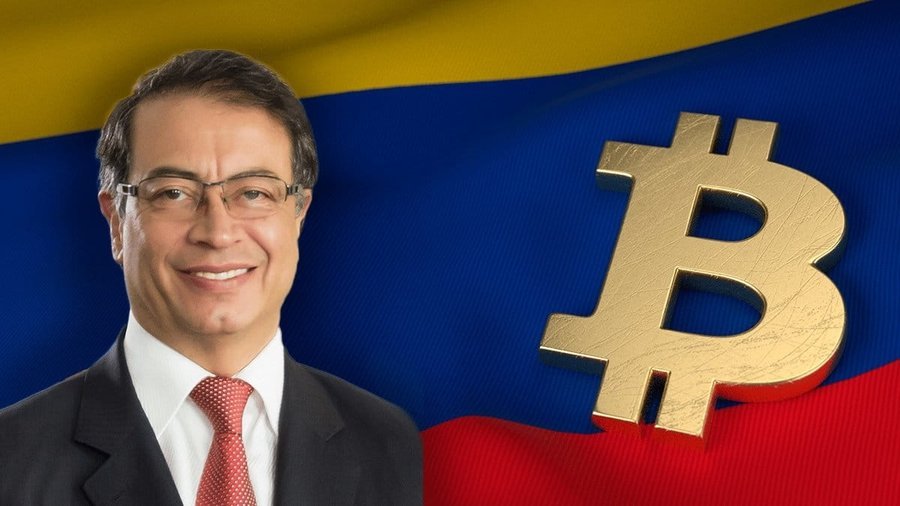
The president of Colombia is trying to get Colombians interested in bitcoin mining by suggesting the Caribbean coast as a testing ground. Barranquilla, Santa Marta, and Riohacha, according to President Gustavo Petro’s Tuesday X post, may become bitcoin mining centers by using the country’s excess renewable energy, adopting a strategy that has been successful for Paraguay and Venezuela in recent years.
Petro expressed his belief that it would be a significant improvement to the Caribbean’s growth and suggested that the Wayúu people, the biggest Indigenous group in Colombia located along the same coast, be granted co-ownership of the project.
Banking on Green Energy
According to a World Bank research from 2024, renewable energy accounts for more than double the average worldwide power generation in Colombia, reaching up to 75% of the country’s total. In instance, the nation has seldom used its wind and solar potential along the Caribbean coast for economic purposes.
Instead of letting that excess power sit idle, Petro thinks it would be better to mine bitcoin with it. This would also help the sector escape the fossil-fuel pollution worries that have plagued it in other places.
Alessandro Cecere of Luxor Technology had previously noted in an X post that Paraguay’s proportion of the world’s hashrate had increased to 4.3% because to the inexpensive hydroelectric power generated by the Itaipu Dam; his comments were a direct reaction to that.
Hashrate Index data shows that the landlocked South American nation is now the world’s fourth-largest bitcoin mining jurisdiction, behind only China, Russia, and the United States.
Itaipu and two smaller hydroelectric facilities provide all of Paraguay’s mining operations with the renewable energy they need, more than enough to meet the energy needs of the country’s 7 million inhabitants.